Contents
If you’ve ever operated a recycling line for plastic film, you know the sound. It’s the groan of a motor straining, followed by the sickening silence of a jam. You look inside, and there it is: a tightly wound knot of plastic film wrapped around the rotor, bringing your entire operation to a halt.
This isn’t just an annoyance; it’s a profit killer. Every minute spent clearing a jam is a minute you aren’t making money.
But what if this problem could be engineered away?
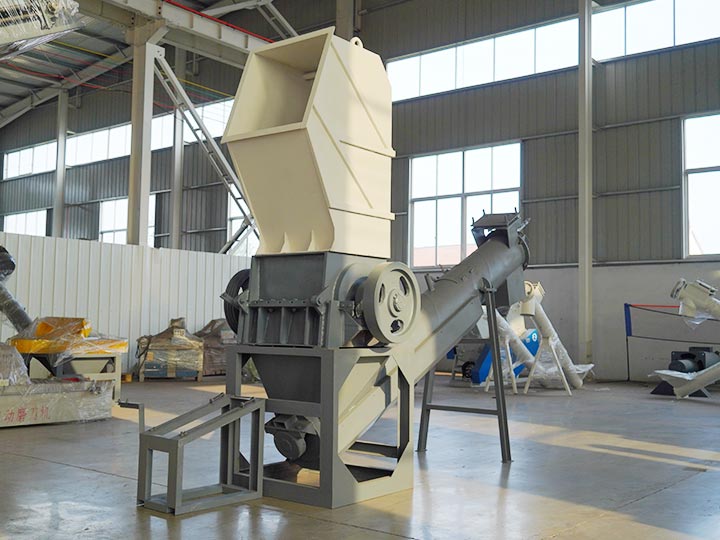
It can be. The solution isn’t about more power or bigger blades. It’s about a smarter, more intentional plastic film shredder design. Let’s pull back the curtain on the engineering that separates a world-class machine from a constant headache. A superior plastic film shredder design considers every component’s role in handling this uniquely difficult material.
The Rotor: The Heart of the Anti-Tangle System
The rotor is the central rotating component that does the cutting. A flat, simple rotor is a recipe for disaster with film. The material will inevitably “walk” to the sides of the chamber, wrapping around the shaft ends near the bearings.
This is where the “V-Shape” rotor, a cornerstone of modern plastic film shredder design, comes in.
Instead of being flat, the blades are arranged in a distinct “V” pattern. As the rotor spins, this V-formation naturally funnels all the material towards the center of the chamber. It constantly re-centers the film, keeping it directly in the most effective cutting zone and far away from the problematic shaft ends. This simple-looking but critical aspect of plastic film shredder design is the first line of defense against wrapping.
Blade Geometry: It’s Not Just Sharp, It’s Smart
Having sharp blades is obvious. But how those blades are shaped and arranged is what truly matters.
- Shear Angle: The blades on the rotor and the fixed blades on the machine’s housing are angled precisely to create a “scissor cut” action. This clean shear slices through the film instantly, rather than “punching” or “tearing” it, which gives the material a chance to stretch and wrap.
- Staggered Layout: The blades are often staggered, not perfectly aligned. This means that at any given moment, only a few blades are engaged in cutting. This approach reduces the instantaneous load on the motor and allows the machine to process a surge of material without stalling. It’s a subtle but vital part of an efficient plastic film shredder design.
Chamber Clearance: No Room for Error
The space between the rotating blades and the machine’s housing (the chamber wall) must be incredibly tight. A well-executed plastic film shredder design minimizes this gap. If the clearance is too large, even by a few millimeters, thin film can slip through, get wedged, and start the wrapping process all over again.
This precision engineering is a hallmark of a high-quality machine. It ensures that every piece of material that enters the chamber is forced into the path of the blades.
The Bottom Line: Design is Everything
A cheap machine might look similar from the outside, but it’s these integrated design elements that determine its real-world performance. A machine might have a V-rotor but use poor quality blades. It might have sharp blades but sloppy chamber clearances.
An effective plastic film shredder design isn’t about a single feature; it’s about the synergy of all these components working together. It’s a holistic system engineered specifically to combat the unique, stretchy properties of plastic film. This is how you achieve maximum uptime and, ultimately, maximum profitability.
Want to see this anti-tangle design in action? Watch our machines demolish film waste or speak with our engineers to discuss how our specific designs can solve your unique material challenges.